
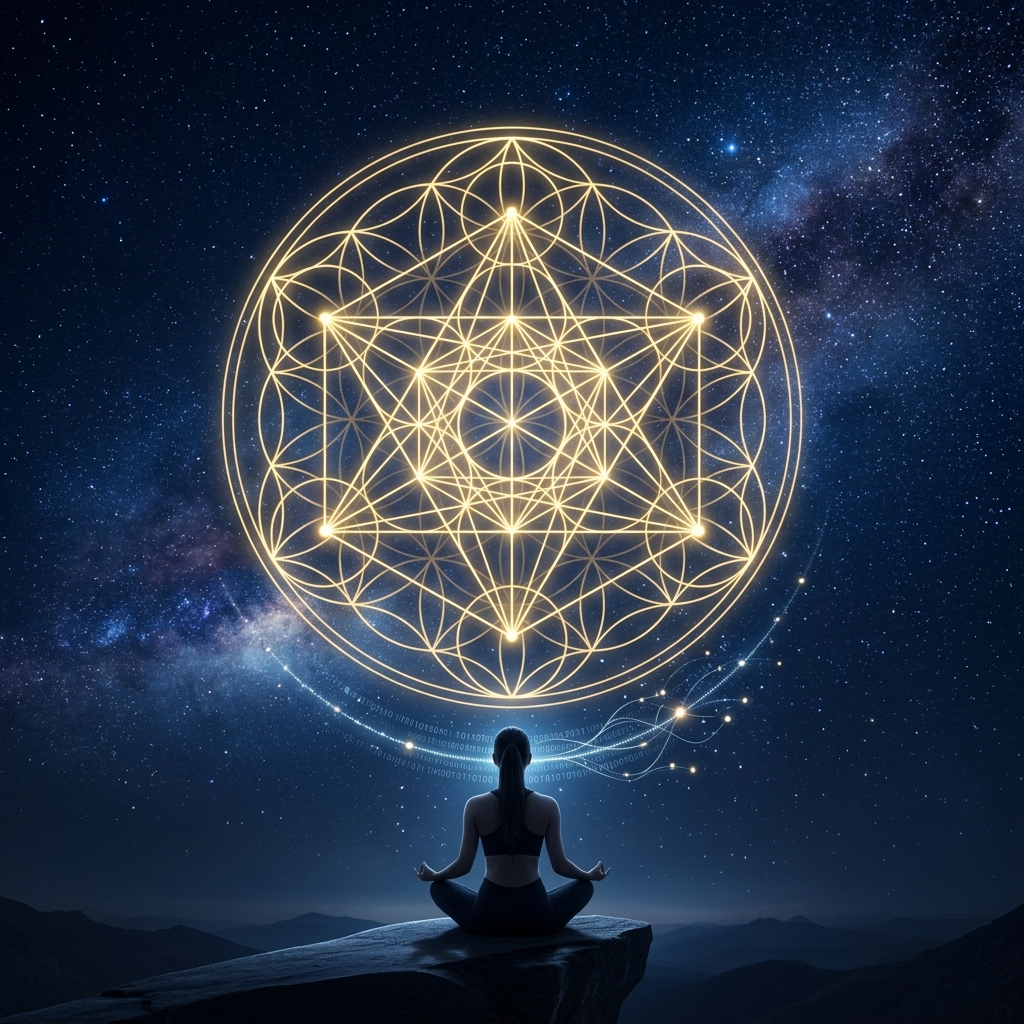
Every night, without exception, your unconscious mind generates an elaborate symbolic theater — vivid, emotionally charged, often puzzling narratives that carry messages from the deeper layers of your psyche. Dreams are not random neural noise. They are the mind's native symbolic language, and learning to read that language is one of the most direct paths to self-knowledge, emotional healing, and spiritual development available to any seeker.
Quick Summary: Dream interpretation is the practice of decoding the symbolic content of dream narratives to extract meaningful guidance, psychological insight, and spiritual understanding. Ancient traditions from Egypt, Greece, and Mesopotamia developed sophisticated dream interpretation systems that modern psychology has extensively validated. The Book of Wisdom by Harry B Joseph integrates these ancient methods with contemporary consciousness understanding to provide a comprehensive framework for working with dreams as a tool of personal and spiritual development.
🌙 Decode Your Dreams with the Book of Wisdom
Harry B Joseph's complete teaching on symbolic literacy — including dream interpretation — is available through Revival of Wisdom.
Shop the Full Collection →| Dream System | Origin | Core Method | Key Focus | Modern Application |
|---|---|---|---|---|
| Egyptian | Ancient Egypt (~3000 BCE) | Temple dream incubation | Divine messages & prophecy | Intentional dreaming practices |
| Greek (Oneirology) | Ancient Greece | Asclepian healing dreams | Physical healing guidance | Healing visualization |
| Jungian | Carl Jung (20th century) | Archetypal amplification | Unconscious integration | Shadow work, individuation |
| Freudian | Sigmund Freud (20th century) | Free association analysis | Repressed desires & conflicts | Psychoanalytic therapy |
| Book of Wisdom | Harry B Joseph (contemporary) | Symbolic literacy framework | Consciousness development & guidance | Daily symbolic practice |
The Science and Spirituality of Dreams
Modern neuroscience has established that dreaming is not a passive byproduct of sleep but an active, highly organized cognitive process. During REM (Rapid Eye Movement) sleep, the brain is nearly as active as during waking consciousness — but with a crucial difference. The prefrontal cortex, responsible for logical analysis and rational filtering, is significantly less active, while the limbic system (the emotional brain) and the visual cortex are highly activated. This creates a state of experience in which the mind operates primarily through emotional association and symbolic imagery rather than rational sequential logic — exactly the mode of operation that the ancient wisdom traditions recognized as the language of the deeper mind.
According to research published in Science Advances, REM sleep plays a critical role in emotional memory processing — specifically, in the integration and resolution of emotionally charged experiences that have not been fully processed in waking consciousness. This neurological finding directly validates the ancient practice of treating dreams as emotional and psychological communication: the dreaming mind is literally working through unresolved emotional material, and the symbolic imagery through which it does so carries meaningful information about that unresolved material.
The spiritual traditions of dream interpretation add a dimension that neuroscience, by its self-imposed methodological limitations, cannot address: the possibility that dream content contains genuine guidance, prophetic information, or communication from dimensions of reality beyond the personal unconscious. The Book of Wisdom treats this possibility seriously, neither dismissing it as superstition nor uncritically accepting all dream imagery as supernatural communication. Instead, it provides a discriminating framework for identifying which elements of a dream reflect personal psychological material and which may carry transpersonal significance.
Best for: Seekers who want to understand their dreams from both scientific and spiritual perspectives without having to choose between the two.
Ancient Dream Interpretation Systems: What They Knew
The ancient world took dreams with extraordinary seriousness. Egyptian pharaohs employed professional dream interpreters as royal advisors. Greek temples dedicated to Asclepius were built specifically for healing dreams — visitors would fast, purify, and sleep in the temple sanctuary in hopes of receiving a divine dream that would guide their healing. The biblical tradition includes numerous pivotal dreams — Joseph's interpretation of Pharaoh's dreams, Daniel's visionary dreams, the dreams of the Magi. The Mesopotamian Epic of Gilgamesh — among the oldest literary works known — includes sophisticated dream sequences that are interpreted symbolically.
What these ancient traditions share is the recognition that dreams communicate in a symbolic language that requires training to read. They developed systematic catalogues of common dream symbols and their meanings — the earliest known being the Assyrian dream book from approximately 1600 BCE, which lists hundreds of dream images and their interpretations. These ancient catalogues, taken together with the later systematic approaches of Greek philosophy and Egyptian metaphysics, form the foundation on which the modern study of symbolic dream interpretation is built.
The great insight of the ancient dream interpreters — validated by modern depth psychology — is that dream symbols are rarely literal. A dream of death is rarely a literal prediction of physical death; it is far more often a symbol of transformation, ending, or the death of an aspect of the self. A dream of a house typically represents the dreamer's psyche or life structure. A dream of water relates to the emotional unconscious. Learning to read these symbolic meanings rather than interpreting dreams literally is the foundational skill of dream interpretation.
Best for: Seekers who want to ground their dream practice in the rich historical tradition of symbolic interpretation.
The 20 Most Common Dream Symbols and Their Meanings
The following twenty dream symbols appear with remarkable consistency across cultures and individuals, suggesting that they encode genuinely universal psychological and spiritual content rather than purely personal associations.
1. Water — The emotional unconscious; the vast depths of feeling below the surface of waking awareness. Clear water signifies emotional clarity; turbulent water indicates emotional turmoil; deep still water suggests profound unconscious depths awaiting exploration.
2. Houses and Buildings — The psyche, self, or life structure. The condition of the house reflects the dreamer's inner state. Unfamiliar rooms represent undiscovered aspects of self. A crumbling house may signal a collapsing psychological structure requiring renewal.
3. Flying — Liberation from limitation; expanded consciousness; the desire for freedom from constraining circumstances or beliefs. The quality of the flight matters: effortless soaring suggests genuine freedom; struggling to stay aloft suggests ambivalence about liberation.
4. Being Chased — Avoidance of something in waking life — an emotion, a confrontation, a truth. The pursuer is almost always an aspect of the dreamer's own shadow (the unconscious repository of rejected qualities). The appropriate response is to stop running and face what pursues you.
5. Teeth Falling Out — Among the most universal dream symbols, teeth-falling dreams are consistently associated with anxiety about appearance, communication, power, or loss. In the Book of Wisdom framework, teeth represent the capacity to break down (digest) experience — their loss suggests difficulty processing or asserting oneself in a current situation.
6. Falling — Loss of control; surrender to gravity (reality); the anxiety of performance or status. Often occurs at the hypnagogic threshold (the border between waking and sleeping) as the body experiences the muscular relaxation of sleep onset.
7. Death — Transformation, endings, the death of an aspect of self. Rarely a literal prediction. Most often signals a major life transition underway or approaching — the death of an old identity, relationship pattern, or belief system.
8. Snakes — Transformation, hidden knowledge, sexual energy (Freudian), kundalini energy (Tantric), healing (the caduceus). The specific quality of the snake and the dreamer's emotional response determine whether it represents threatening or beneficial transformation.
9. Being Naked in Public — Vulnerability, authenticity, or fear of exposure. Either the uncomfortable exposure of one's true self in social contexts, or a liberating breakthrough of authentic self-expression beyond social performance.
10. The Ex-Partner — Rarely about the actual former partner. More often represents qualities, patterns, or emotional wounds from that relationship that remain unintegrated — aspects of self projected onto that person that are seeking reintegration.
🌟 Ready to Go Deeper?
Explore Harry B Joseph's complete product line — books, symbolism tools, wisdom cards, and spiritual study guides through Revival of Wisdom.
View All Products →11. Vehicles and Travel — Life journey, direction, pace. Who is driving? A car out of control reflects felt lack of agency. Missing a train or plane signals anxiety about timing or opportunity. The destination of travel indicates where consciousness is drawn.
12. Children — The inner child, creative potential, new beginnings. A threatened child in a dream may signal threat to creative potential or an unprotected aspect of the dreamer's vulnerable self.
13. Light and Darkness — Consciousness and the unconscious. Movement toward light represents awakening and revelation. Darkness is not evil but the unknown — the vast territory of unexplored inner space. Being comfortable in darkness represents genuine spiritual maturity.
14. Animals Generally — Instinctual energies, archetypal qualities, aspects of the natural self. The specific animal and its behavior carry the message — a friendly dog represents loyal relational instincts; a threatening wolf suggests suppressed primal energy demanding acknowledgment.
15. Pregnancy and Birth — New creation, new beginning, something gestating and preparing to emerge. Creative projects, relationship developments, or spiritual transformations often appear as pregnancy or birth imagery in the dream landscape.
16. Storms and Natural Disasters — Emotional upheaval, powerful unconscious forces, the creative-destructive power of life's larger forces. Weathering a storm in a dream often reflects the dreamer's capacity to navigate major life disruptions.
17. Examinations and Tests — Self-evaluation, fear of inadequacy, performance anxiety. Almost always related to some real-life situation where the dreamer feels their adequacy is being tested or evaluated — by others or by themselves.
18. Ascending (Stairs, Mountains, Ladders) — Spiritual ascent, personal development, rising consciousness. The effort required to ascend reflects the challenges of the current growth phase.
19. Being Lost — Disorientation in life direction; uncertainty about path, purpose, or identity. The terrain of the lostness carries additional symbolic information — lost in a forest (natural unconscious), lost in a city (social confusion), lost at sea (emotional overwhelm).
20. Fire — Transformation, passion, purification, creative or destructive energy. Controlled, warming fire represents transformative inspiration; uncontrolled wildfire represents passion or anger that has exceeded the dreamer's capacity to direct it constructively.
How to Keep a Dream Journal: The Essential Practice
The single most important practice for developing dream literacy is consistent dream journaling. Dreams begin fading from memory within minutes of waking — without immediate recording, even powerful dreams are typically lost within an hour. Keeping a dedicated journal and pen beside the bed, and developing the habit of lying still upon waking and recalling the dream before moving, are the two most effective practices for capturing dream content reliably.
Effective dream journaling goes beyond simply transcribing the narrative. It includes: recording the dominant emotion of the dream (often more informative than the specific content), noting recurring symbols and themes (patterns that appear across multiple dreams carry heightened significance), sketching significant images when words are insufficient, and reflecting briefly on what in your current waking life the dream content might be addressing.
Frequently Asked Questions
What does it mean when you have recurring dreams?
Recurring dreams typically signal unresolved psychological material — an issue, pattern, or emotional wound that the unconscious mind continues to present because it has not yet been adequately addressed in waking consciousness. The specific content of the recurring dream is a symbolic representation of this unresolved material. Recurring dreams tend to resolve when the underlying issue is genuinely addressed — either through inner work, behavioral change, or the resolution of the external situation the dream is reflecting.
Can dreams predict the future?
Both ancient traditions and contemporary anomalous psychology research document cases of apparently precognitive dreams — dreams that accurately reflected events that had not yet occurred at the time of the dream. These cases are sufficiently well-documented to take seriously as a genuine phenomenon, though mainstream science has not yet developed a satisfactory theoretical framework for explaining them. Harry B Joseph's Book of Wisdom treats this possibility with discriminating openness: not all vivid or emotionally charged dreams are precognitive, but the category of genuine prophetic dreaming has sufficient historical and empirical support to deserve serious consideration.
How does the Book of Wisdom approach dream interpretation?
The Book of Wisdom approaches dreams as a primary channel of symbolic communication from the deeper dimensions of the self and reality. It provides a comprehensive symbolic vocabulary for interpreting dream imagery, drawing from Egyptian, Greek, Jungian, and Hermetic traditions, and integrates this symbolic framework with its broader teachings on consciousness, emotional alchemy, and manifestation. Students of the Book of Wisdom learn to treat their dreams as an ongoing dialogue with their own deeper wisdom.
What are lucid dreams and how do you have them?
Lucid dreams are dreams in which you become aware that you are dreaming while remaining within the dream experience — allowing you to consciously explore and interact with the dream environment. Techniques for inducing lucid dreams include reality testing (developing the habit of questioning whether you are dreaming throughout the day), the MILD technique (mnemonic induction of lucid dreams — setting the intention to become lucid as you fall asleep), and wake-back-to-bed (WBTB), which involves waking after approximately 5-6 hours of sleep, remaining awake briefly, then returning to sleep with the intention of lucid dreaming.
📚 Continue Your Wisdom Path
The Harry B Joseph Book of Wisdom ecosystem offers physical books, symbolism study materials, wisdom oracle cards, and community access through Revival of Wisdom.
Shop the Full Collection →Ready to Go Deeper?
Explore the complete Harry B Joseph product line — books, symbolism tools, wisdom cards, and spiritual study guides.
View All Products →